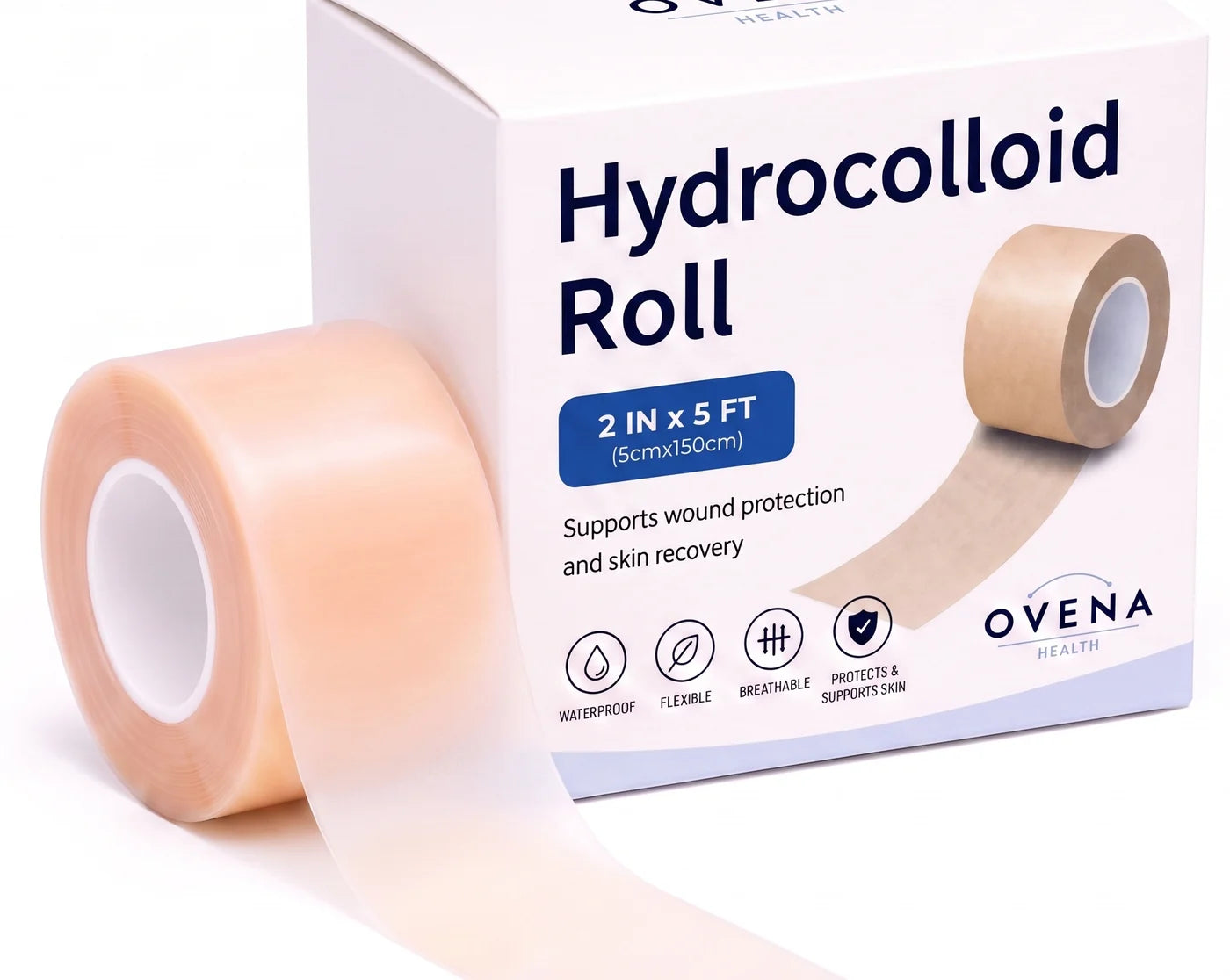
Hydrocolloid wound care resources
A resource hub for hydrocolloid dressing guides, including cut-to-size rolls, blister care, acne patches, showering, and when not to use hydrocolloid.
 Reviewed byDavid Chahine, MD
How to use a hydrocolloid roll: cut-to-size basics
Clean, cut, round the corners, warm, press. The five-step routine that gets a clean seal, how long to leave it on, and how to take it off without tearing skin.
Read guide → Comparison · 8 minCollagen vs hydrocolloid: which dressing for which wound?
Two common modern dressings, two completely different mechanisms. A short decision tree, plus the wounds where neither one is the right answer.
Read guide → Comparison · 4 minMighty Patch vs cut-to-size hydrocolloid roll
Pre-cut patches cost ~$0.36 each; a 16-ft roll works out to under a cent per same-sized patch. The math on when each makes sense, plus the size-flexibility argument.
Read guide → Comparison · 6 minDuoDERM alternative: the cut-to-size hydrocolloid roll
How a cut-to-size roll compares to DuoDERM's pre-cut sheets on adhesion, moisture handling, and cost per square inch. When to use which, and when either works.
Read guide → Pillar · 7 minHydrocolloid for blisters & friction wounds
How to cover an active blister on a foot or hand without popping it, what changes once it has opened, and the prevention layer for nurses, hikers, and athletes.
Read guide → How-to · 7 minHydrocolloid for surface acne: what a patch can and cannot do
A hydrocolloid disk covers an open blemish, absorbs the fluid it gives off, and keeps hands off it. Which spots it suits, which it does not, and why a roll is the cheapest way to keep enough on hand.
Read guide → How-to · 7 minHydrocolloid post-Mohs & minor surgical sites
When clinicians sometimes use a hydrocolloid after a small procedure, when they do not, and the warning signs that always mean call your surgeon.
Read guide → How-to · 7 minShowering with hydrocolloid: does it actually stay on?
Water-resistant is not waterproof. What that difference means for a hydrocolloid seal, how long one really holds in the shower, and when to re-apply.
Read guide → Safety · 6 minWhen NOT to use hydrocolloid
Infected wounds, heavily draining wounds, deep puncture wounds, third-degree burns, and arterial ulcers — five of the situations where hydrocolloid is the wrong dressing entirely.
Read guide →